
In short
For an interior designer we built two things. A codex: one digital book per client, part inspiration deck before the work, part progress tracker during, part home reference manual after, opened with a passcode. And Luna, the studio's agent: invoices become data entry inside the system, and monday.com stays in sync while the work moves into the Codex.
The Codex
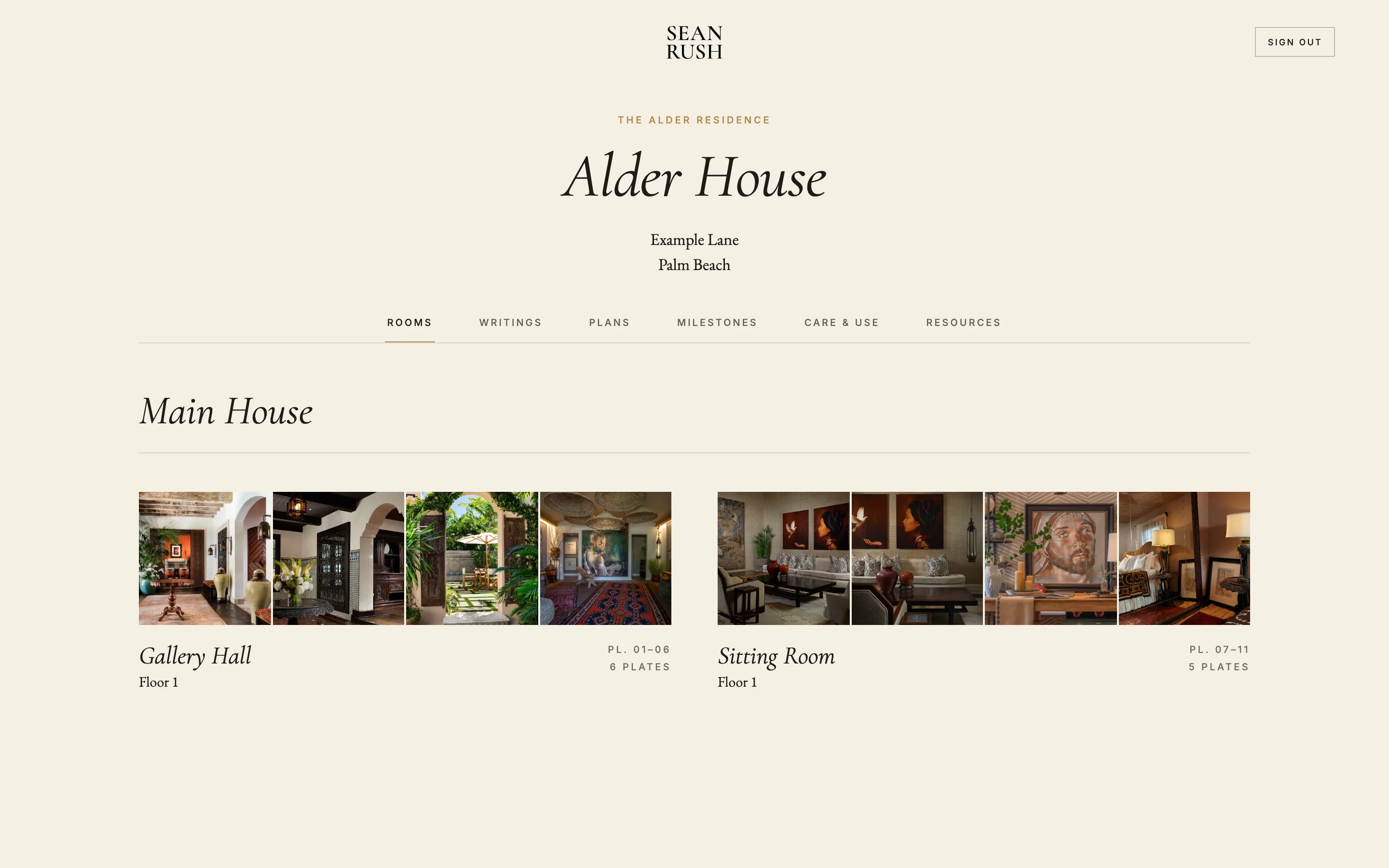
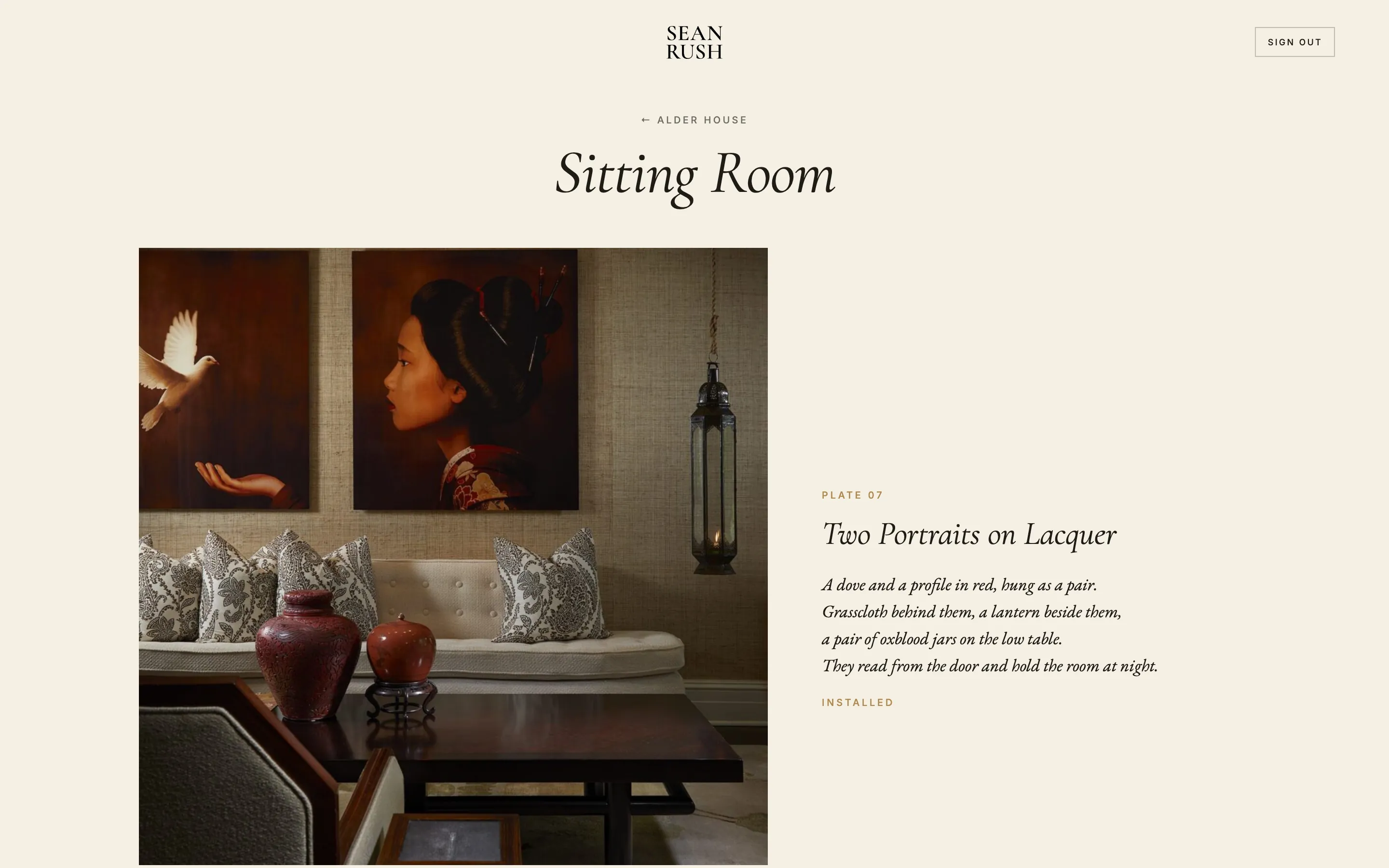
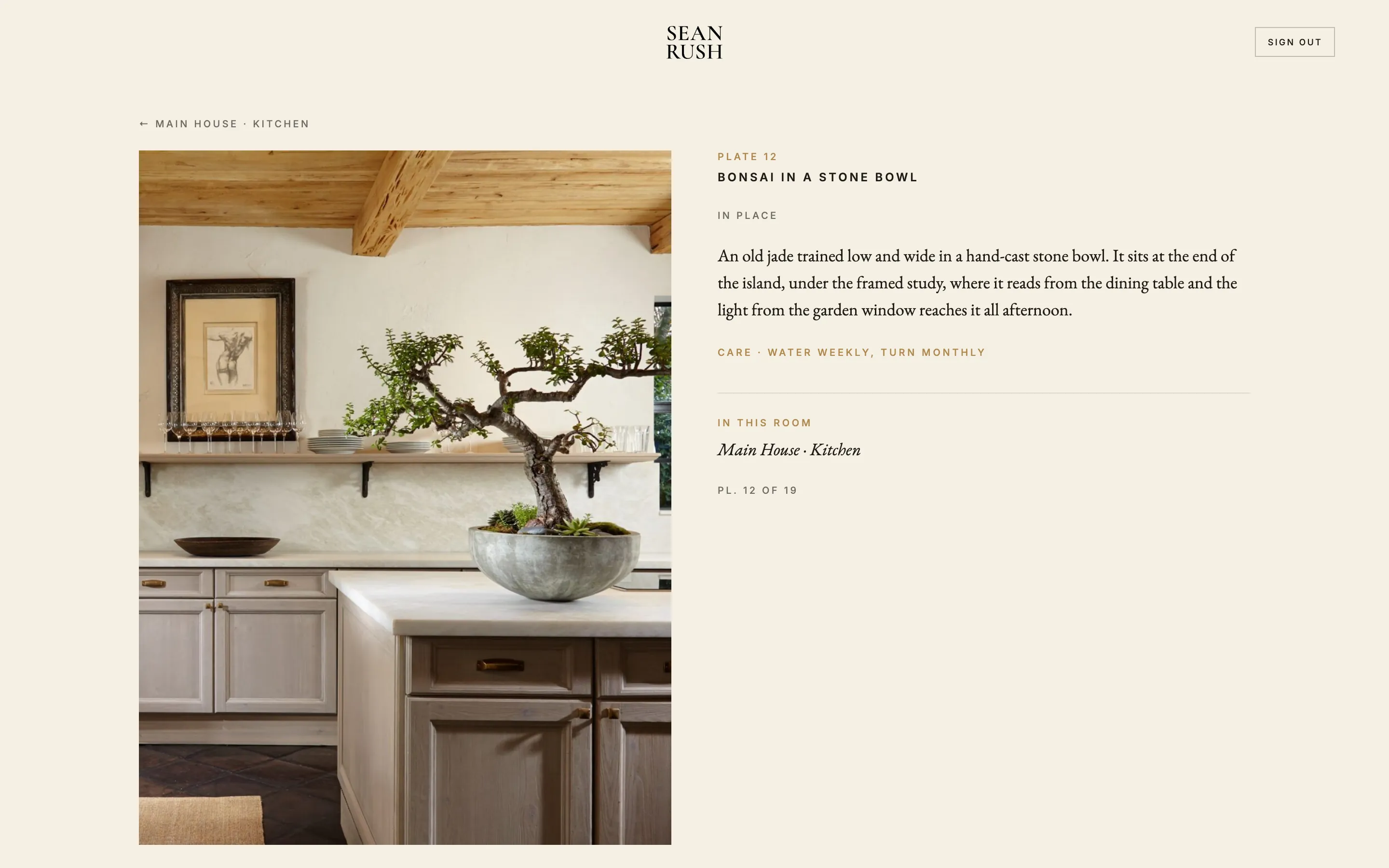
One book per home.
01The client
Sean Rush, interior designer.
Clients who want to see what is coming and, after it is done, want a record of what was chosen and why.
02What we designed
A book, an agent, a site.
The codex.
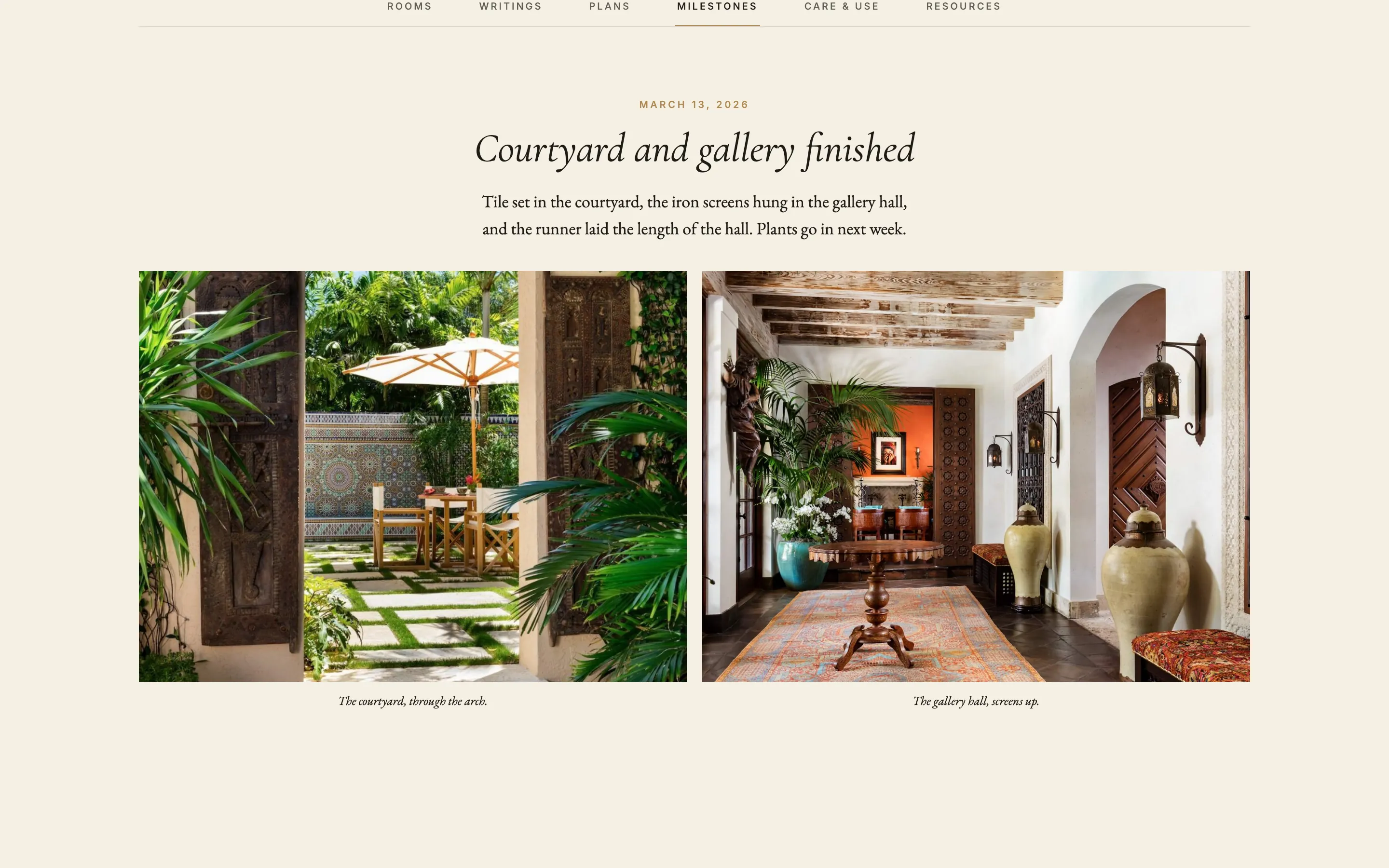
One book per client, with addresses, structures, rooms, items, photographs, and editorial sections: text, milestones, the story of the project. A museum-catalog layout in cream, ink, and gilt, set in Garamond. The designer's team edits in an admin with magic-link sign-in; the client opens their book with a four-digit code.
The invoice agent.
Luna reads the studio's invoices and turns them into data entry inside the system: vendor, item, room, price. Nobody retypes a line.
The bridge.
The studio still runs on monday.com. Luna works with it, so the boards stay current while the work moves into the Codex one piece at a time.
The site.
The marketing site, built around the studio's own photography.
03The rule
Client records stay with the studio.
Client names, addresses and invoices stay inside the studio's own system. Nothing is posted or published. Every book on this page uses a changed name. That is in the agent's instruction file and it is why the designer can hand Luna a client's paperwork without thinking about it.
04What it shows
The paperwork handled, for a business whose product is taste.
The designer's judgment goes into the rooms. The agent does the data entry. And the codex is the five percent of a project-management tool this business actually needed: the book, the rooms, the items, the story.